Navigating County-Level Data Providers for Arizona Foreclosures: A Complete Guide
Introduction
For real estate investors seeking foreclosure opportunities in Arizona, accessing accurate county-level data is both essential and challenging. With 15 different counties each maintaining their own systems and protocols, finding reliable foreclosure information can feel like navigating a complex maze. However, understanding how to effectively access and utilize these county data sources can give investors a significant competitive advantage in identifying profitable opportunities before they become widely known.
The landscape of foreclosure data in Arizona has evolved significantly in recent years, with many counties transitioning to digital platforms while others maintain hybrid or traditional systems. This shift has created both opportunities and obstacles for investors trying to stay ahead of the market. Whether you're tracking Notice of Trustee Sales in Maricopa County or monitoring tax lien sales in Pima County, knowing how to efficiently navigate these various data sources can mean the difference between securing a profitable investment and missing out entirely.
Understanding County-Level Data Sources
Primary Data Providers
Arizona's county-level foreclosure data typically comes from three main sources: County Recorder's offices, County Assessor's offices, and County Sheriff's departments. Each plays a distinct role in the foreclosure process and maintains different types of records. The County Recorder's office maintains the Notice of Trustee Sale filings, which mark the beginning of the foreclosure process. County Assessors maintain property tax records and delinquency information, while Sheriff's departments handle foreclosure auction notices and sales.
In Maricopa County, for example, the Recorder's office provides online access to foreclosure filings through their digital portal, updating records within 24-48 hours of filing. Meanwhile, Pima County maintains a comprehensive tax lien database that includes both current listings and historical data on expiring liens and bankruptcies.
Digital vs. Traditional Access Methods
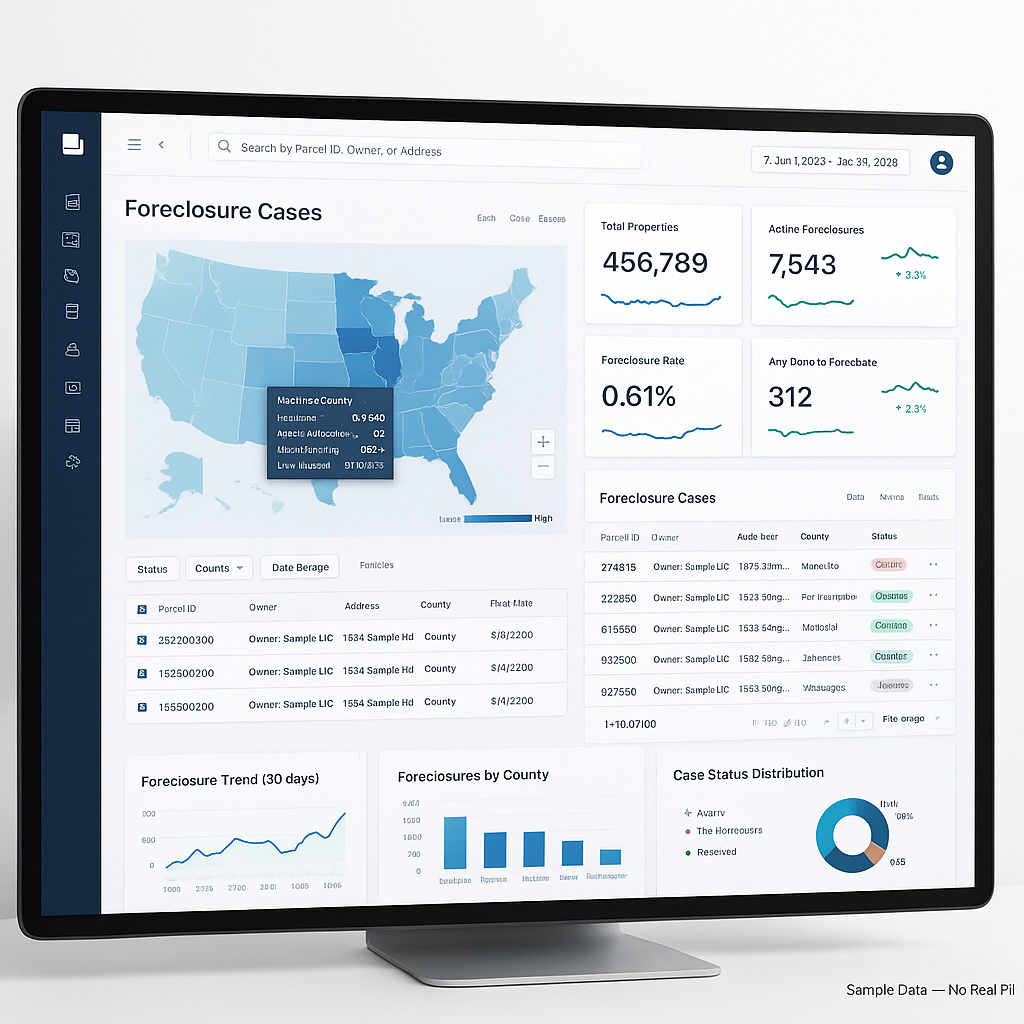
Most larger Arizona counties now offer some form of online access to foreclosure data. Maricopa County leads with its comprehensive digital platform that allows investors to search delinquent tax records using interactive parcel maps. However, smaller counties like Graham and Greenlee still rely primarily on in-person visits or direct requests for foreclosure information.
The digital divide between counties creates varying levels of accessibility:
- Tier 1 Counties (Maricopa, Pima, Pinal): Offer comprehensive online platforms with real-time updates
- Tier 2 Counties (Yuma, Mohave, Yavapai): Provide basic online search capabilities with delayed updates
- Tier 3 Counties (Graham, Greenlee, La Paz): Require in-person visits or direct contact for most information
Accessing Specific Types of Foreclosure Data
Notice of Trustee Sale Records
The Notice of Trustee Sale (NOTS) represents the first public notice of a foreclosure action in Arizona. These records are particularly valuable because they provide a 90-day window before the potential foreclosure sale. Accessing NOTS data requires understanding each county's specific protocols:
Maricopa County maintains a searchable online database updated daily, allowing investors to filter by filing date, property address, and trustor name. In contrast, Navajo County requires a manual search of recorded documents, though they do provide digital access to basic filing information.
Tax Lien and Tax Deed Sales
Tax-related foreclosure opportunities follow different tracking systems. Yuma County, for example, maintains separate databases for tax deed sales and tax lien sales, each with its own search parameters and update schedules. Pinal County offers a comprehensive property listing search specifically for tax lien sales, including upcoming auction dates and minimum bid amounts.
Practical Applications for Investors
Understanding how to effectively use county-level data providers requires developing a systematic approach. Start by identifying your target counties and learning their specific systems. Create a schedule for regular data checks that aligns with each county's update frequency. For instance, Maricopa County's daily updates warrant daily monitoring, while monthly checks might suffice for smaller counties with less frequent filings.
Common Mistakes to Avoid
Many investors make the error of relying solely on third-party aggregators without verifying information through county sources. This can lead to missed opportunities or working with outdated information. Another common mistake is failing to understand the timing of different counties' update cycles, resulting in delayed responses to new listings.
The most costly mistake is not cross-referencing data between different county departments. For example, a property might appear in the Recorder's NOTS database but have additional complications visible only in Assessor or Treasurer records. Always verify information across all available county sources before making investment decisions.
Pro Tips and Best Practices
Successful investors often develop relationships with county staff who can provide insights into system updates or process changes. In smaller counties especially, these relationships can be invaluable for getting early notification of new filings or upcoming sales.
Consider creating a custom tracking system that combines data from multiple county sources. This might include automated alerts from digital platforms in larger counties combined with scheduled check-ins for smaller county records. Document your findings systematically, noting any patterns in filing times or sale schedules that could give you an advantage.
Conclusion
Mastering Arizona's county-level foreclosure data systems requires patience and systematic effort, but the competitive advantage it provides is worth the investment. Start with your target county's primary data sources, understand their specific protocols and timing, and gradually expand your tracking system to include additional counties as your investment strategy grows. Remember that the most successful investors are those who combine efficient data access with thorough verification across multiple county sources.