
Why We Created MagicList: The Story Behind Arizona's Foreclosure Intelligence Platform
Table of Contents
- Introduction
- The Batch Leads Problem
- 15 Years of Building Tech Companies
- The Wholesaler Conversations That Changed Everything
- Why Foreclosures? Why Arizona?
- The Single-County Advantage
- Building for Real Investors, Not Data Tourists
- The Technical Architecture We Built
- What Makes MagicList Different
- Our Vision for the Future
- Conclusion
Introduction
After spending 15 years building technology companies specializing in UI/UX, AI, and data scraping, I thought I'd seen every flavor of bad software. I was wrong.
When I started talking to real estate wholesalers and investors about their workflows, I discovered something shocking: the tools they were using—platforms they were paying hundreds of dollars per month for—were actively making their jobs harder, not easier.
This is the story of why we created MagicList, a foreclosure intelligence platform built specifically for Arizona real estate investors. It's not a story about brilliant innovation or revolutionary technology. It's a story about listening to users, understanding their pain points, and building something that actually solves their problems.
The Batch Leads Problem
Let me start with the catalyst: Batch Leads.
For those unfamiliar, Batch Leads is one of the most popular real estate data platforms in the country. They offer nationwide coverage, dozens of list types, and millions upon millions of property records. On paper, it sounds incredible. In practice? It's a nightmare for anyone trying to find foreclosure opportunities.
The "Incredible Breadth, Zero Depth" Problem
I borrowed this phrase from a wholesaler in Phoenix who perfectly summarized the Batch Leads experience: "Incredible breadth but zero depth."
Here's what that looks like in practice:
Monday Morning with Batch Leads:
- Log into the platform (already paying $149/month for access)
- Navigate to the foreclosure section (one of 50+ list types)
- Set geographic filters (state, county, city, ZIP codes)
- Set property filters (type, price range, bedrooms, bathrooms)
- Set financial filters (equity, loan type, distressed indicators)
- Set timeline filters (filing date, auction date)
- Set owner filters (occupied vs. vacant, absentee)
- Export 500 properties (your monthly limit)
- Pay $75 for skip tracing those 500 leads ($0.15/lead)
- Import into your dialer
- Start calling
- Realize 400 of the 500 don't fit your criteria
- Go back to Step 2 and adjust filters
- Repeat until you run out of patience or money
The Real Cost:
- $149/month platform access
- $150-250/month in skip tracing fees
- 10-15 hours per week filtering and qualifying data
- Extreme frustration and opportunity cost
And here's the kicker: You're looking at the same data as thousands of other investors. By the time you call these leads, they've already been contacted by a dozen other wholesalers using the exact same platform.
The Death by a Thousand Filters
The fundamental problem with Batch Leads isn't that it's bad software. It's that it's built for the wrong use case.
Batch Leads is designed to give you access to data. What real estate investors actually need is qualified opportunities. There's a massive difference.
Imagine if Amazon worked like Batch Leads:
- Here's access to our entire product database
- Set 15 different filters to find what you want
- Export your search results
- Pay separately for shipping
- Good luck!
It sounds absurd, but that's exactly how real estate data platforms work.
15 Years of Building Tech Companies
Before I tell you how we built MagicList differently, let me share some context about where I'm coming from.
I've spent the last 15 years building technology companies with a focus on three areas:
1. UI/UX Design
I'm obsessed with user experience. Not in the "make it pretty" way, but in the "make it actually usable" way. I've seen too many products that look beautiful but are functionally useless.
My philosophy: If your user needs a manual, you've failed.
2. AI and Machine Learning
I've been working with AI long before ChatGPT made it cool. My focus has always been practical applications—using machine learning to solve real problems, not to create hype.
For MagicList, this meant:
- OCR document extraction from county recorder PDFs
- Natural language processing for data normalization
- Predictive modeling for pre-foreclosure identification
- Quality scoring algorithms for lead qualification
3. Data Scraping and Automation
I've built systems that process millions of data points daily. I know how to extract structured data from unstructured sources, handle edge cases, and build resilient pipelines.
This expertise was crucial for MagicList because foreclosure data is messy. County recorders don't provide nice, clean APIs. They provide PDFs—sometimes scanned images from the 1990s—and expect you to figure it out.
The Wholesaler Conversations That Changed Everything
The real turning point came when I started having conversations with wholesalers and foreclosure investors in Arizona.
I wasn't trying to sell them anything. I was genuinely trying to understand: What's working? What's frustrating? What would make your job easier?
Conversation #1: Marcus in Phoenix
Marcus does 8-12 wholesale deals per month in the Phoenix metro area. Successful by any measure. But when I asked him about his workflow, he pulled up his screen and showed me something shocking.
He had three different tabs open:
- Batch Leads (for property data)
- TruePeopleSearch (for manual skip tracing)
- Google Sheets (tracking which properties he'd already called)
His exact words: "I spend 15 hours a week just trying to find good leads. Then I spend another 20 hours calling them. If I could cut that first 15 hours to zero, I'd double my business."
That was the lightbulb moment.
Conversation #2: Sarah in Mesa
Sarah is a fix-and-flip investor. She doesn't wholesale—she buys, renovates, and sells. Her criteria are very specific:
- Single-family homes
- Under $250K purchase price
- Minimum 40% equity
- Owner-occupied (more motivated)
- Built between 1970-2010 (easier to renovate)
She was spending $200-300/month on Batch Leads and skip tracing services, filtering through thousands of properties to find 10-15 that matched her criteria.
Her exact words: "Why isn't there a list that's just 'flip-ready SFRs under $250K'? That's all I want. I don't need access to every property in America."
Another lightbulb.
Conversation #3: James (New Investor)
James had just started investing in foreclosures. He'd closed one deal and was looking for his second. He was drowning in Batch Leads.
His exact words: "I have no idea if I'm looking at good deals or not. There's so much data, and I don't know what matters. I wish someone would just tell me: 'Here are 20 properties, ranked A through C. Start with the A's.'"
Third lightbulb.
The Pattern I Saw
After dozens of these conversations, I noticed a clear pattern:
What investors were paying for:
- Access to massive databases
- Filtering tools
- Raw data exports
What investors actually wanted:
- Qualified opportunities
- Pre-scored leads
- Actionable intelligence
- Time savings
The gap between what was being sold and what was needed was enormous.
Why Foreclosures? Why Arizona?
When I decided to build MagicList, I made two strategic decisions that define everything about the product:
1. Foreclosures Only
I could have built another generic real estate data platform. Absentee owners, pre-probate, expired listings, cash buyers—there are dozens of list types I could have included.
I didn't.
MagicList is 100% focused on foreclosure opportunities. Here's why:
Foreclosures are time-sensitive. Unlike absentee owners (who might sell someday), foreclosure timelines are defined and predictable. There's a countdown clock, which creates urgency for both the seller and the investor.
Foreclosures have public paper trails. Every document is filed with the county recorder. This creates a data source that's:
- Comprehensive (every foreclosure is documented)
- Structured (there are only a few document types)
- Timely (documents are filed as events happen)
- Free (public records, no expensive data licenses)
Foreclosures require specialization. Understanding the difference between a Notice of Trustee Sale, Substitution of Trustee, Deed of Trust, and Warranty Deed isn't intuitive. Building systems that can extract, normalize, and score this data requires deep domain expertise.
The competition is generic. Every major platform treats foreclosures as one of many list types. Nobody is building the world's best foreclosure intelligence platform. That's the opportunity.
2. Arizona (Specifically Maricopa County)
The second strategic decision: single-county focus.
I could have built for nationwide coverage. Every investor I talked to asked, "Will you expand to [their state]?"
My answer: "Eventually. But not yet."
Here's why starting with Maricopa County, Arizona was the right call:
Every County is a Snowflake
This is the dirty secret of real estate data platforms: every county in America handles public records differently.
- Different document types
- Different filing systems
- Different online portals (or no portal at all)
- Different data formats
- Different naming conventions
- Different timelines
Building a system that works in all 3,000+ U.S. counties requires:
- Hundreds of custom parsers
- Constant maintenance as counties change systems
- Generic features that work everywhere but excel nowhere
It's why Batch Leads and similar platforms are so shallow—they're spreading their engineering resources across too many use cases.
The Single-County Advantage
By focusing exclusively on Maricopa County, we could:
Go 10x deeper. We know every edge case. We know how Maricopa County formats addresses. We know which fields are reliable and which are garbage. We know the typical timeline from filing to auction.
Update 10x faster. We poll the Maricopa County Recorder every 6 hours. Most national platforms update weekly or monthly because they're aggregating data from thousands of sources.
Build 10x faster. A feature that would take 6-8 months to build for nationwide coverage takes 4-8 weeks for a single county.
Achieve 10x accuracy. Our enrichment coverage is 87% because we've fine-tuned our systems specifically for Maricopa County data. National platforms are lucky to hit 60-70%.
Maricopa County: The Perfect Test Market
Beyond the technical advantages, Maricopa County is an ideal starting point:
Large market. 4.5 million people, 1.7 million housing units. This is the 4th largest county in the U.S. by population.
Active foreclosure market. Arizona is a non-judicial foreclosure state, which means foreclosures move faster and are more predictable than judicial states.
Tech-savvy investors. Phoenix has a mature real estate investor community with wholesalers, fix-and-flip operators, and institutional buyers.
Good public records. Maricopa County has a modern online recorder system with searchable documents and a usable API (after you discover it exists).
My backyard. I'm based in Arizona. I can talk to local investors face-to-face, understand their specific needs, and iterate quickly based on feedback.
The Single-County Advantage (Deep Dive)
Let me elaborate on why the single-county focus is such a strategic advantage, because it's counterintuitive in a world that values "scale" and "nationwide coverage."
Precision vs. Breadth
There's a fundamental tradeoff in data platforms:
Breadth: Cover more geographies, more data types, more use cases Depth: Excel in specific geographies, specific data types, specific use cases
Most platforms choose breadth because it's easier to market. "Nationwide coverage!" sounds impressive. "Maricopa County only!" sounds limited.
But here's what actually matters to users: Does it work for my specific use case?
A Phoenix wholesaler doesn't care about foreclosure data in Ohio. They care about having the most accurate, most timely, most actionable data in Phoenix.
The Technical Reality
Building for multiple counties isn't just "do it once, then copy-paste." Here's what it actually looks like:
Document Format Variations:
- County A: PDFs with searchable text
- County B: Scanned images requiring OCR
- County C: HTML pages with inconsistent formatting
- County D: No online access, must be physically present
Field Name Variations:
- County A: "Grantor/Grantee"
- County B: "Party 1/Party 2"
- County C: "Trustor/Beneficiary"
- County D: No labels, just positional parsing
Address Format Variations:
- County A: "123 MAIN ST PHOENIX AZ 85001"
- County B: "123 Main Street, Phoenix, Arizona 85001"
- County C: "123 MAIN STREET PHOENIX 85001 ARIZONA"
- County D: "MAIN STREET 123"
Every variation requires custom code. Every county is its own engineering project.
By focusing on one county, we can build a system that's perfect for that county instead of mediocre for every county.
The Update Frequency Advantage
Real-time matters in foreclosure investing.
National platforms: Must aggregate data from thousands of counties. This means:
- Batch processing (update once per day/week/month)
- Lag time (data is already stale when you see it)
- Inconsistent freshness (some counties update faster than others)
MagicList: Direct integration with Maricopa County Recorder. This means:
- Poll every 6 hours
- New filings appear within hours
- Consistent, predictable data freshness
In foreclosure investing, being first matters. If you call a distressed seller 3 days after the notice is filed vs. 3 weeks after, your chances of getting the deal increase dramatically.
The Accuracy Advantage
Our 87% enrichment coverage isn't luck—it's the result of single-county specialization.
What we can do because we only focus on Maricopa County:
- Custom parsers for every Maricopa County document type
- Hardcoded validation rules for Maricopa County addresses
- Direct integration with Maricopa County Assessor's ArcGIS API
- Manual verification of edge cases specific to Maricopa County
- Continuous refinement based on Maricopa County data quirks
What national platforms must do:
- Generic parsers that work "most of the time"
- Generic validation rules that miss local edge cases
- No county-specific integrations (too much maintenance)
- No manual verification (too many counties)
- No continuous refinement (too many variations)
The result: We catch edge cases that national platforms miss. Our data is cleaner, more complete, and more reliable.
Building for Real Investors, Not Data Tourists
One of the core principles that guided MagicList's development: We're building for investors who close deals, not data tourists who browse listings.
The Data Tourist Problem
Most real estate data platforms are designed for data tourists—people who want to browse, explore, and "see what's out there."
This manifests in features like:
- Infinite scroll through thousands of properties
- Map views with hundreds of pins
- Dozens of filter options for every possible criterion
- Export limits to prevent abuse
- "Save search" features for monitoring
These features sound useful, but they encourage bad behavior: analysis paralysis.
The Deal-Closer Workflow
Real investors who close deals have a different workflow:
- Know their criteria (I buy SFRs under $250K with 40%+ equity)
- Get matched leads (here are 15 properties that fit)
- Prioritize by quality (start with the A's, then B's, then C's)
- Take action immediately (call within 24 hours)
- Track outcomes (deal closed, no answer, not interested)
Notice what's missing: filtering, browsing, exploring.
MagicList is built around this deal-closer workflow, not the data tourist workflow.
Curated Lists, Not Infinite Options
This is why MagicList uses a list subscription model instead of a filtering model.
Instead of: "Here's access to 10,000 foreclosure properties. Set filters until you find what you want."
We do: "Here are 5 pre-built lists based on common strategies. Subscribe to the one(s) that match your criteria. We'll handle the filtering."
Our lists:
- "Flip-Ready SFRs Under $250K"
- "High-Equity Cash Cows (50%+ Equity)"
- "New Investor Bundle Under $200K"
- "Pre-Pre-Foreclosure Early Warnings"
- "Substitution of Trustee - 45 Day Heads Up"
Each list is:
- Pre-filtered based on investor feedback
- Pre-scored (A/B/C quality tiers)
- Pre-skip-traced (phone/email included)
- Continuously updated (every 6 hours)
The investor's job is simple: Pick your list. Download. Start calling.
Why This Works
The list subscription model works because most investors fit into a few common personas:
The Wholesaler: Wants high-equity properties in any price range. Prioritizes early warning and owner contact info.
The Fix-and-Flip Operator: Wants SFRs under $250K with renovation potential and owner-occupancy.
The New Investor: Wants straightforward deals under $200K with clear equity positions and minimal complications.
The Creative Finance Specialist: Wants owner-occupied properties with high LTV loans for subject-to deals.
By building lists around these personas, we eliminate the need for filtering. The investor simply subscribes to the list that matches their strategy.
The Technical Architecture We Built
Now let me pull back the curtain and show you how MagicList actually works under the hood. This matters because the architecture enables the advantages.
The 9-Stage SAGA Orchestration
MagicList processes foreclosure documents through a 9-stage pipeline:
Stage 1: Polling/Ingestion
- Poll Maricopa County Recorder API every 6 hours
- Search for new filings: Notice of Sale (NS), Deed of Trust (DOT), Warranty Deed (WD), Substitution of Trustee (ST)
- Download PDF documents
- Store in Cloudflare R2 (object storage)
Stage 2: OCR Extraction
- Run PaddleOCR on PDF documents (free, open-source)
- Extract raw text from each page
- Handle both native PDFs and scanned images
- Store raw text for downstream processing
Stage 3: Validation/Normalization
- Send raw text to DeepSeek-Chat (cost-efficient AI)
- Extract structured fields: addresses, loan amounts, parties, dates
- Normalize addresses to USPS format
- Validate extracted data against known patterns
Stage 4: Canonicalization
- Deduplicate properties across multiple filings
- Link documents by APN (Assessor's Parcel Number)
- Build document timeline (DOT → ST → NS → Auction)
- Establish property as unique entity
Stage 5: Research/Graph Discovery
- Cross-reference with Maricopa County Assessor API
- Pull 28 enrichment fields (assessed value, market value, owner info, etc.)
- Link to historical sales data
- Build relationship graph (trustees, beneficiaries, owners)
Stage 6: Relationship Detection
- Identify same investors across multiple properties
- Track trustee patterns (which trustees file most aggressively)
- Flag professional investor acquisitions
- Build network intelligence
Stage 7: Property Enrichment
- Calculate equity position (market value - loan amount)
- Determine owner-occupancy status (owner address = property address)
- Flag delinquent property taxes
- Add market comparables
Stage 8: Result Aggregation
- Score property quality (A/B/C tiers)
- Assign to appropriate lists based on criteria
- Calculate composite scores across multiple dimensions
Stage 9: Skip Tracing
- Run phone number lookups (multiple providers)
- Search email addresses
- Verify mailing addresses
- Store contact data with property record
The Cost Economics
One of our core advantages is cost efficiency. Here's how we do it:
OCR: PaddleOCR (Free)
- Self-hosted open-source OCR
- Runs on CPU (no expensive GPU required)
- 95%+ accuracy on foreclosure documents
vs. commercial OCR APIs at $0.10-0.50 per page
AI Normalization: DeepSeek-Chat ($0.001 per request)
- Takes raw OCR text, returns structured JSON
- 87% cost savings vs. GPT-4
vs. GPT-4 at $0.03 per request
County Data: Free Public APIs
- Maricopa County Recorder (free)
- Maricopa County Assessor ArcGIS (free)
vs. data aggregators at $50-200/month for API access
Storage: Cloudflare R2 ($0.015 per GB)
- Cheaper than AWS S3
- No egress fees
- Built-in CDN
Infrastructure: Railway ($20/month)
- PostgreSQL database
- Redis for caching
- Background job processing
Total cost to process 1,500 foreclosure documents per month: ~$25
This is why we can offer:
- Free skip tracing (included in subscription)
- No per-lead fees
- Lower prices than competitors
We've optimized the entire pipeline to be cost-efficient, and we pass those savings to customers.
The 4-Tier Lead Classification System
Every property in MagicList gets scored across multiple dimensions:
Dimension 1: Equity Percentage
- 50%+ equity: 100 points
- 40-50% equity: 80 points
- 30-40% equity: 60 points
- 20-30% equity: 40 points
- <20% equity: 20 points
Dimension 2: Owner-Occupancy Status
- Owner-occupied: 100 points (more motivated)
- Non-owner-occupied: 50 points
- Unknown: 25 points
Dimension 3: Loan Type
- Conventional: 100 points (easier to work with)
- FHA/VA: 80 points
- Portfolio/Private: 60 points
- Unknown: 40 points
Dimension 4: Recency
- Filed within 7 days: 100 points (hottest leads)
- Filed 8-30 days: 80 points
- Filed 31-60 days: 60 points
- Filed 60+ days: 40 points
Dimension 5: Data Quality
- Complete data (all 28 fields): 100 points
- Mostly complete (20-27 fields): 80 points
- Partial data (15-19 fields): 60 points
- Limited data (<15 fields): 40 points
Composite Score:
- A-Grade: 400+ points (top 20% of properties)
- B-Grade: 300-399 points (solid opportunities)
- C-Grade: 200-299 points (worth calling if you have time)
- D-Grade: <200 points (low priority)
This scoring system is what enables our curated lists. We're not just dumping data—we're providing investment intelligence.
What Makes MagicList Different
Let me summarize the key differentiators that make MagicList unique in the market:
1. Foreclosure Specialization
We ONLY do foreclosure opportunities. Every feature, every integration, every optimization is built for one use case: helping investors find distressed properties before they hit auction.
Why this matters: Depth of expertise. We understand foreclosure timelines, document types, legal processes, and investor strategies better than any generalist platform.
2. Single-County Focus (for now)
Maricopa County only. This allows us to achieve:
- 87% enrichment coverage (vs. 60-70% for national platforms)
- 6-hour update cycles (vs. weekly/monthly)
- Higher accuracy, deeper data, better user experience
Why this matters: Better data quality leads to better investment decisions.
3. Early Warning Intelligence
We track Substitution of Trustee filings, which typically occur 45 days before Notice of Trustee Sale. We also build predictive models to identify "pre-pre-foreclosure" properties before they show up in public records.
Why this matters: Call distressed sellers 3-6 months before your competitors even know the property exists.
4. List Subscription Model
Instead of "here's access to data, good luck filtering," we provide pre-built lists for common strategies:
- Flip-Ready SFRs Under $250K
- High-Equity Cash Cows (50%+ Equity)
- New Investor Bundle Under $200K
Why this matters: Eliminates hours of manual filtering. Subscribe, download, dial.
5. Free Skip Tracing
Phone numbers, emails, and mailing addresses included with every property. No per-lead fees. No credit systems.
Why this matters: Save $100-250/month vs. competitors. Predictable costs.
6. A/B/C Quality Scoring
Every property is pre-scored based on equity, owner-occupancy, loan type, recency, and data quality.
Why this matters: Prioritize your calling list. Start with A's, move to B's, skip C's if you're busy.
7. Real-Time Updates
Poll county recorder every 6 hours. New properties appear within hours, not weeks.
Why this matters: Be first to call. First-mover advantage in foreclosure investing is massive.
8. Built by a Technical Founder Who Listens
I'm not a lead generation company trying to maximize extraction. I'm a technical founder building a tool I'd want to use, informed by real conversations with real investors.
Why this matters: Product decisions are driven by user needs, not arbitrary metrics.
Our Vision for the Future
MagicList is just getting started. Here's where we're headed:
Near-Term (Next 6 Months)
Predictive Pre-Foreclosure Models Identify properties likely to enter foreclosure 6-12 months before the first filing, using signals like:
- Delinquent property taxes
- High LTV loans (80%+)
- Code violations
- USPS vacancy indicators
- Loan modification patterns
Advanced Filter System Add a Notion-style slash command interface for power users who want more control while maintaining simplicity for everyone else.
Mobile App Native iOS/Android apps for accessing lists on the go.
Medium-Term (6-12 Months)
Arizona County Expansion Expand beyond Maricopa to Pima County (Tucson) and Pinal County, bringing the same depth to other major Arizona markets.
Integration Ecosystem Direct integrations with:
- REI Sift (CRM)
- Batch Dialer
- Podio
- Investor-focused CRMs
Enhanced Skip Tracing Multi-provider skip tracing with quality scoring. Show confidence levels for each contact method.
Long-Term (12-24 Months)
Predictive Capital Deployment Machine learning models that identify property flippers immediately post-exit, enabling wholesalers to approach them with new opportunities when they have capital to deploy.
Multi-State Expansion Expand to other non-judicial foreclosure states with strong investor communities:
- Texas (Harris, Dallas, Tarrant counties)
- California (selected counties)
- Nevada (Clark County - Las Vegas)
- Colorado (Denver metro)
Maintaining single-county depth while expanding breadth.
Investor Intelligence Platform Build comprehensive profiles of repeat investors, trustees, and beneficiaries. Track patterns, success rates, and acquisition strategies.
What We Won't Do
Just as important as our roadmap is what we've decided NOT to do:
We won't add every possible list type. No absentee owners, pre-probate, expired listings, etc. Foreclosures only.
We won't sacrifice quality for quantity. We'll expand to new counties slowly, ensuring 85%+ enrichment coverage before launching.
We won't add per-lead pricing. Our business model is subscriptions, not nickel-and-diming users for every phone number.
We won't build for enterprise. No API access, no white-label solutions, no custom integrations for large institutions. We're built for individual investors and small teams.
We won't go nationwide for the sake of it. We'll only expand to markets where we can maintain our quality standards.
Conclusion
Why did we create MagicList?
Because after 15 years of building technology companies and months of talking to real estate investors, I saw a massive gap in the market: Nobody was building world-class foreclosure intelligence specifically for investors who close deals.
Every platform was either:
- Too broad (trying to be everything to everyone)
- Too shallow (nationwide coverage with poor data quality)
- Too expensive (per-lead fees that punish success)
- Too slow (weekly/monthly updates)
- Too complicated (death by a thousand filters)
MagicList exists to solve one problem exceptionally well: Help investors find high-equity foreclosure opportunities before the competition, with skip-traced contact data, in a format that eliminates manual filtering.
We're doing this by:
- Specializing in foreclosures only
- Focusing on single counties (starting with Maricopa)
- Building early warning systems (3-6 months ahead)
- Providing curated lists (not infinite options)
- Including free skip tracing (no per-lead fees)
- Scoring every property (A/B/C tiers)
- Updating in real-time (every 6 hours)
This isn't revolutionary technology. It's pragmatic engineering applied to a real problem, informed by conversations with real users.
We created MagicList because the existing tools were frustrating, expensive, and inefficient. We believe investors deserve better.
If you're tired of spending 15 hours per week filtering through junk data on Batch Leads, if you're sick of paying $0.15 per lead for skip tracing, if you want to call distressed sellers before everyone else even knows they're distressed—MagicList was built for you.
Ready to see MagicList in action?
Schedule a 15-minute demo and see live foreclosure lists, A/B/C scoring, and skip-traced contact data.
Or start with our free sample property report to see what our data actually looks like.
About the Author
Cody Robertson is the founder of MagicList. He's spent 15 years building technology companies specializing in UI/UX, AI, and data scraping. Based in Arizona, he created MagicList after discovering that real estate investors were being underserved by generic data platforms. Connect with him at hello@magiclist.agency.
Keywords for SEO: Why we created MagicList, MagicList foreclosure platform, Arizona foreclosure investing, Batch Leads alternative, foreclosure intelligence software, Maricopa County foreclosures, real estate investor tools, wholesale real estate leads, pre-foreclosure opportunities, foreclosure data platform, real estate technology, distressed property investing
Meta Description: Discover why we built MagicList, Arizona's foreclosure intelligence platform. Learn how 15 years of tech experience and conversations with wholesalers led to a better alternative to Batch Leads.
Founder of MagicList and expert in Arizona real estate and foreclosure investing, passionate about helping investors discover high-equity opportunities before the competition.
Suggested Reading
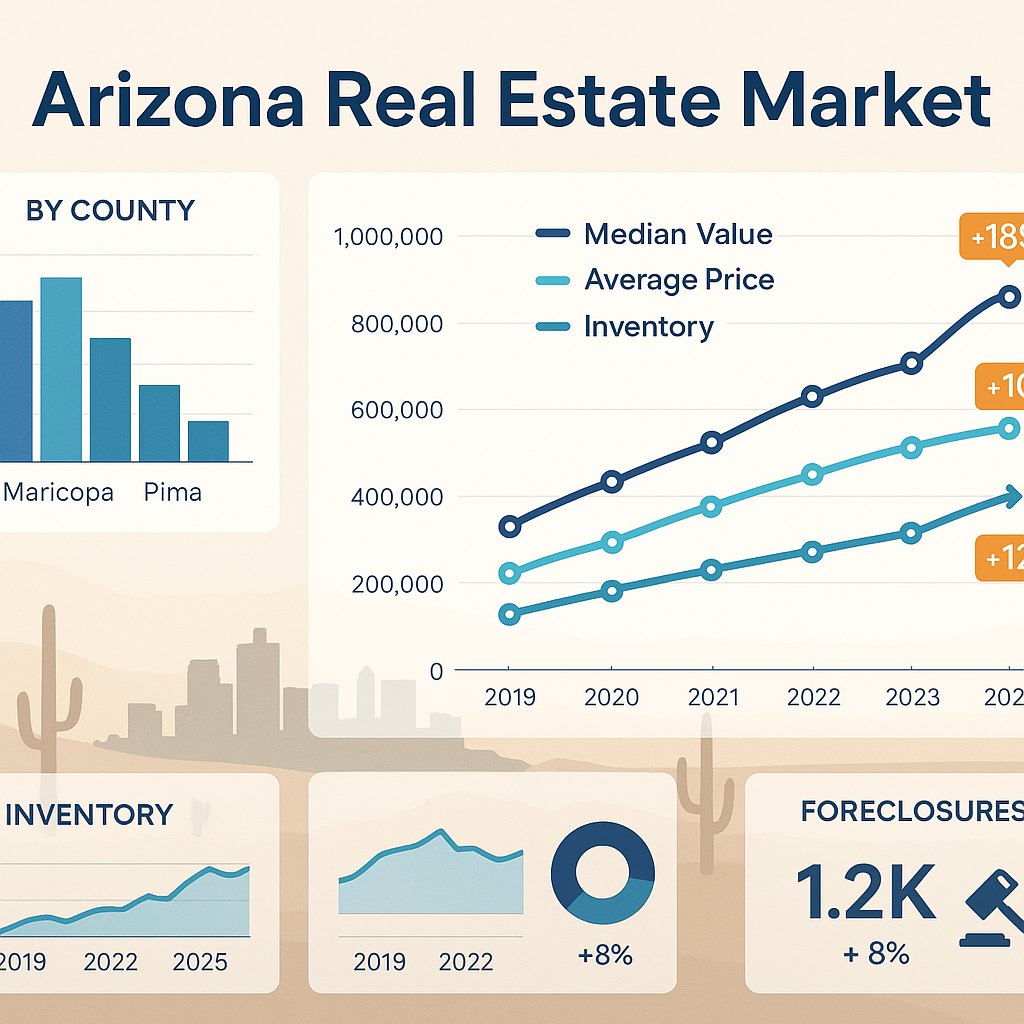
Arizona Foreclosure Market Trends in 2025
Discover the latest trends in Arizona's foreclosure market and learn how to identify high-equity opportunities before your competition.
Read article
Who Is MagicList For? A Complete Guide to Our Target Audience
Learn who benefits most from MagicList's foreclosure intelligence platform - from new investors to active wholesalers and fix-and-flip operators in Arizona.
Read article
The Complete Guide to Skip Tracing for Real Estate Investors
Learn proven skip tracing techniques to find property owners and maximize your real estate investing success.
Read article